
Dark clouds gathering
As spring training games begin, a labor dispute threatens baseball's future.

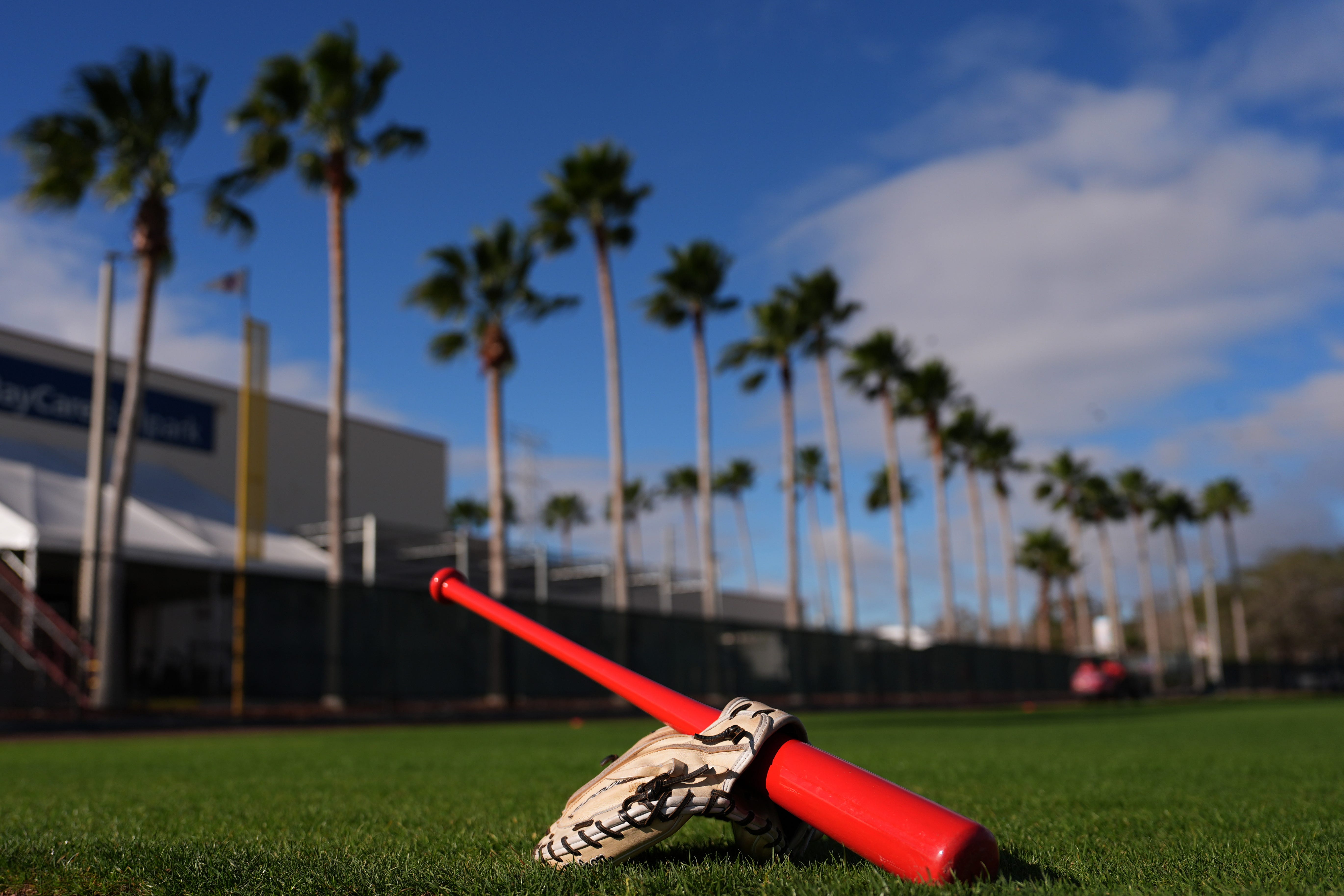
Associated Press photo
Normally, the mere images of spring training sites are enough to ease the February gloom of “snowcrete” and Punxsutawney Phil’s seemingly accurate prediction of a long, cold winter.
This year, though, the vibe coming from Florida and Arizona is a lot more ominous. The 2026 season promises to be eventful and exciting, but as exhibition play begins this weekend, there’s no guarantee there will be games in ’27.
Major League Baseball’s current collective bargaining agreement will expire immediately after the final out of the World Series in late October or early November, and the owners and players could hardly be further apart in their outlook on a new deal.
Team owners adamantly want to join their peers in North America’s other major sports leagues by instituting a salary cap. Understandably, the players are almost unanimous in their opposition.
Negotiations will begin in April, but no one is expecting a quick resolution — especially after longtime players’ union executive director Tony Clark stepped down unexpectedly this week following revelations of an inappropriate personal relationship with a union employee.
Deputy director Bruce Meyer is expected to lead the talks, at least on an interim basis. But there’s no guarantee that he’ll get the permanent job — or that he has the support of his players.
That’s one of several factors that will make negotiations difficult. The biggest is the huge spending gap between baseball’s Haves (most notably the L.A. Dodgers, New York Mets and Yankees, Philadelphia Phillies, Toronto Blue Jays, Boston Red Sox and Chicago Cubs) and its Have-Nots (like the nomadic Athletics, Miami Marlins, Cleveland Guardians and yes, even the Washington Nationals).
The final straw in the chasm may have come when the two-time defending World Series champion Dodgers gave free agent outfielder Kyle Tucker a four-year, $240 million contract last month, pushing their expected 2026 payroll above $400 million. Between them, Tucker and Shohei Otani are on the books for over $100 million of that total — or more than the Marlins, Guardians and Nationals are currently scheduled to pay their entire 40-man rosters.
The second part of that comparison is what bothers the players’ union. They accuse some teams of intentionally failing to spend enough to stay competitive, even while receiving shared revenue from richer teams which are penalized for exceeding MLB’s Competitive Balance Tax (set at about $244 million per team in 2026).
The union wants a salary floor, not a cap. Again, it’s no surprise that some owners disagree.
And that’s not the only issue dividing baseball’s richest figures. For the past few years, revenue from local game broadcasts have plummeted. The bankruptcy of Bally Sports, which owned contracts for nearly half of the teams, threw the landscape into chaos and forced MLB Local Media to consolidate coverage. (That includes the Nationals, who just escaped a two-decades-long legal fight with the Baltimore Orioles over proceeds from broadcasts on now-defunct MASN.)
Ironically, this acrimony comes just as baseball is hitting a new wave of popularity. Stars like Ohtani have international followings; recent rule changes to speed up the snail-like pace of play have been universally praised; and last fall’s World Series was one of the most dramatic and entertaining in recent memory.
Longtime fans clearly remember baseball’s last major labor stoppage, which canceled the 1994 World Series and prompted owners to recruit non-union replacement teams the following spring before an agreement was finally brokered on the eve of the season. The bitterness of that standoff took years to overcome. It took Cal Ripken’s record-breaking consecutive games streak and a steroid-infused barrage of home runs (which opened up a new set of problems for America’s supposed national pastime) to win fans back.
In the past century, baseball has overcome the Black Sox scandal, racism, the steroids era and other issues and hung on to most of its base. It has always been susceptible to rain delays, but the dark clouds that are gathering over the sport have nothing to do with the weather.
Enjoy this season while you can. Who knows when you’ll get to watch again?